
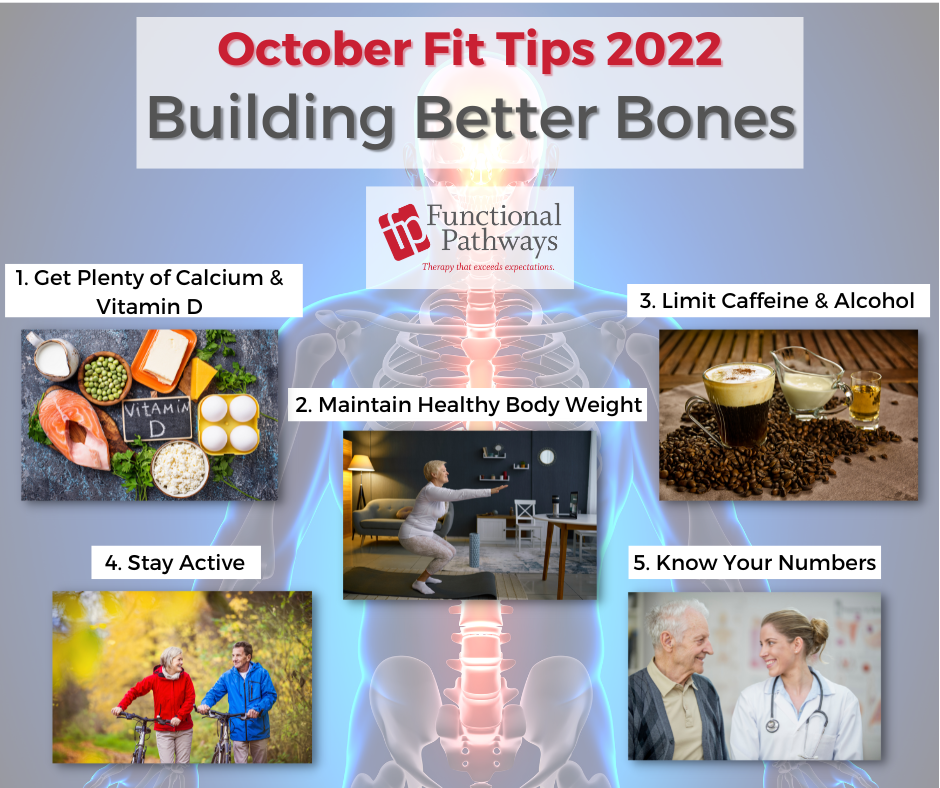
Having strong bones is an important part of staying healthy. Our bones have many important responsibilities, including giving the body its shape, providing support, allowing movement, creating blood cells, storing minerals, and providing protection for organs. Our bones are constantly changing. As old bone breaks down, new bone is made, and by around age 30, we start to lose slightly more bone mass than is gained. While this is all a normal part of the aging process, some are at an increased risk for developing osteopenia, lower bone density than normal for one’s age, or osteoporosis, a more severe condition in which bones become weak and brittle. There are certain controllable risk factors that can be managed to help reduce the chances of developing bone issues.
5 Ways to Maintain Better Bone Health
- Get Plenty of Calcium and Vitamin D. Calcium helps build and maintain bones, and Vitamin D helps your body effectively absorb the calcium you consume. Examples of foods high in calcium include milk, cheese, yogurt, broccoli, brussels sprouts, and shrimp. Examples of foods high in Vitamin D include fatty fish (tuna, mackerel, salmon), cheese, egg yolks, and beef liver.
- Maintain a Healthy Body Weight. Being underweight can increase the risk for osteopenia and osteoporosis. Bone mineral density (BMD), or the amount of bone mineral in your bone, is positively associated with body weight, and lower body weight is a risk factor for fractures. Eating a well-balanced diet and exercising regularly can help you maintain a healthy body weight. If you are concerned about your weight, consult with your physician.
- Limit Caffeine and Alcohol. Having too much caffeine and/or alcohol can decrease the amount of calcium your body absorbs. For caffeine, aim for no more than 400 mg per day (approximately 3 cups of coffee per day). For alcohol, limit intake to 2 drinks or less in a day for men and 1 drink or less in a day for women.
- Stay Active. By staying physically active, your bone adapts by building more bone and becomes denser. Weight-bearing activities, such as walking, jogging, or climbing stairs, can help you build strong bones and slow bone loss. Strength-training exercises, like lifting weights or body-weight movements, should also be done regularly. Consult with your wellness or therapy team for recommendations on what exercises are best for you.
- Know Your Numbers. Get your bone mineral density tested. This is a quick and painless test, performed by your doctor, using an X-Ray (a DXA test), to measure bone mineral density to help determine risks of osteoporosis and fractures. Speak with your physician to see if this test would be beneficial for you.
Resources:
https://www.osteoporosis.foundation/patients/prevention?utm_source=Enigma&utm_medium=cpc&gclid=Cj0KCQjwhY-aBhCUARIsALNIC063MQ0GuYvNHqNUGud_acyx8Ecs6cmKdcayuvz9rGOUxgWXPsV_CvYaAkkbEALw_wcBhttps://health.clevelandclinic.org/7-tips-for-healthy-bones-2/