

If you’ve heard it once, you’ve heard it a hundred times – the newest “trend” in workplaces around the country being discussed is “quiet quitting.” Memes abound with grabby text that seem to insinuate that employees are overworked and underpaid for the performance they provide.
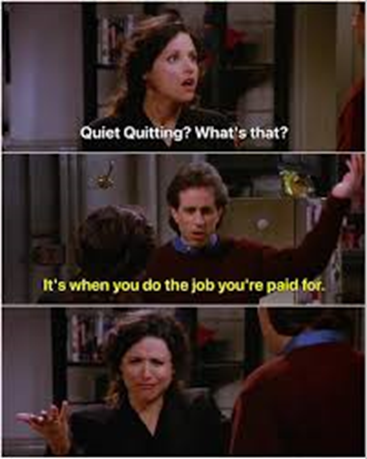
But what is it? Quiet quitting refers to an employee seemingly so burnt out on overdelivering in their job responsibilities that they put a stop to any expectation of them going above and beyond. Long gone are the days of working extra hours for minimal or no extra pay, benefits, or appreciation. Some employers are seeing it as a backhanded way of being lazy; employees say it’s because they’re not getting paid to do extra work and stay extra hours.
Quiet quitting wasn’t meant to encourage employees to “check out” and lay down on the job – what it’s really about is promoting a healthy work/life balance.
In tandem with a positive and encouraging workplace, a healthy work/life balance should provide consistency, reasonable expectations, and overall satisfaction in your job. It goes hand-in-hand with employee engagement, which saw its biggest drop since the start of the pandemic last year. A study done by Gallup showed less than a third of U.S. employees would consider themselves engaged, while the number of employees that call themselves disengaged saw its highest increase in decades.
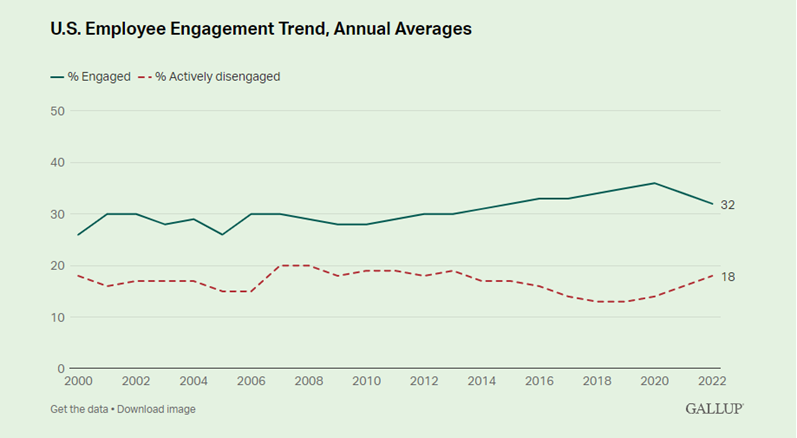
According to Jim Harter at Gallup, “The overall decline [of employee engagement] was especially related to clarity of expectations, opportunities to learn and grow, feeling cared about, and a connection to the organization’s mission or purpose — signaling a growing disconnect between employees and their employers.”
So how do we address it?
First, if you are an employee who feels unsatisfied in your job because of overwhelming responsibilities or other circumstances, talk to your manager now before it becomes too much and work together to find the solution before you’re too underwater to address it.
For managers, make sure to encourage a healthy work life and promote the company culture when engaging with employees. We spend more than a third of our waking hours in the work environment – it ought to be something we enjoy. Even if your employees aren’t speaking up with concerns, take the initiative to head it off at the pass – U.S. Labor Secretary Marty Walsh says, “If you are an employer, you should catch on early enough that your employees aren’t satisfied, aren’t happy, and then there needs to be a dialogue, a conversation.”
You as a manager should also be considering your own work/life balance – do you feel like you’re on call 24/7 or like you can’t take a day off? While there are a multitude of managerial positions whose day-to-day responsibilities ebb and flow with the nature of their business, it is not reasonable to commit every minute of every day to your company. Understand that it’s ok to take a step back occasionally and take a little time for yourself, even if that just means blocking off a few hours in your calendar for a mental health break.
If you have concerns about your work/life balance or are feeling overwhelmed, talk to your HR professional before you reach your tipping point.